Applications mobiles

Feeder pour iPhone, iPad et Android

Vos flux dans votre poche, synchronisés avec Feeder sur le Web. Recevez une notification lorsqu'un flux de votre choix publie une nouveauté.

Un code QR qui ouvre Feeder dans l’App Store ou Google Play

Scannez-le avec l’appareil photo de votre téléphone Ce lien ouvre Feeder dans la boutique d'applications de votre téléphone.

Gratuit. Connectez-vous avec votre compte Feeder ou créez-en un dans l'application.

8:36
Accueil
FluxTous les postsNon luÉtoilé
USGS News· 8 hNOUVEAU
Where do those mesmerizing beautiful blue colors in Yellowstone’s pools come from?
What’s behind the magnificent clear blue of Sapphire Pool in Biscuit Basin? Or those gorgeous milky blues in the namesake features of Norris Geyser Basin’s Porcelain Terrace?
USGS Earthquakes· 9 hNOUVEAU
M 6.4 - 30 km WSW of Lata, Solomon Islands
Grand Teton National Park· 3 joursNOUVEAU
2026 Elk Reduction Program begins November 14 in Grand Teton National Park
Grand Teton National Park will conduct its annual elk reduction program November 14 through December 6.
Death Valley National Park· 6 joursNOUVEAU
Fall Survey Records 137 Endangered Fish in Death Valley National Park
The National Park Service counted 137 endangered Devils Hole pupfish during an Oct. 10 population survey, nearly double the 77 fish observed in spring 2026.
NOAA· 4 joursNOUVEAU
California coastal water levels break records
Above-normal high tides, warm waters, and El-Niño push water levels to new heights
AccueilFluxDécouvrirParamètres
L'application Android de Feeder sur l'écran Non lus de l'accueil : Where do those mesmerizing beautiful blue colors in Yellowstone’s pools come from?; M 6.4 - 30 km WSW of Lata, Solomon Islands; 2026 Elk Reduction Program begins November 14 in Grand Teton National Park; Fall Survey Records 137 Endangered Fish in Death Valley National Park; California coastal water levels break records.
8:36
Accueil
Where do those mesmerizing beautiful blue colors in Yellowstone’s pools come from?
What’s behind the magnificent clear blue of Sapphire Pool in Biscuit Basin? Or those gorgeous milky blues in the namesake features of Norris Geyser Basin’s Porcelain Terrace?
Some fraction of light that hits the surface of the pool is reflected back off the water’s surface, but let’s consider what happens to the light that enters the pool. Just as various molecules in the atmosphere absorb light, water in liquid form absorbs light as well. The red, orange and yellow end of the visible light spectrum is absorbed more strongly than blue light.
Additionally, the longer the distance the light has to travel through the water, the more absorption there will be. Maybe you’ve noticed this if you’ve ever been swimming in the ocean—as you go deeper the world becomes a palette of washed-out blues.
Lire plus
L'application iPhone de Feeder avec un article ouvert, Where do those mesmerizing beautiful blue colors in Yellowstone’s pools come from? de USGS News, sous sa photo de Sapphire Pool.
  • 4,7 App Store · 1 024 évaluations
  • 4,5 Google Play · 1 600 avis

L'information vient à vous avant même l'ouverture

11:13
Sun, Nov 8
11:13
USGS Earthquakes· maintenant
M 6.4 - 30 km WSW of Lata, Solomon Islands
Un écran de verrouillage Android à 11:13 avec une notification de Feeder : USGS Earthquakes, M 6.4 - 30 km WSW of Lata, Solomon Islands.

Une notification pour les flux de votre choix

Activez-la pour les flux qui ne peuvent pas attendre et laissez les autres silencieux. Elle est incluse dans l'offre gratuite.

8:36
Feeder12 non lus
Where do those mesmerizing beautiful blue colors in Yellowstone’s pools come from?
USGS News · il y a 8 h
M 6.4 - 30 km WSW of Lata, Solomon Islands
USGS Earthquakes · il y a 9 h
Feeder
12
articles non lus
Where do those mesmerizing beautiful blue colors in Yellowstone’s pools come from?
12Feeder
L'écran d'accueil d'un iPhone avec le widget de Feeder : 12 non lus et les deux articles les plus récents, Where do those mesmerizing beautiful blue colors in Yellowstone’s pools come from?; M 6.4 - 30 km WSW of Lata, Solomon Islands. L'icône de Feeder affiche également 12.

Vos articles les plus récents sur l'écran d'accueil

Un widget affichant les dernières publications de tous vos flux ou d'un seul dossier. Sur iPhone, le nombre d'articles non lus figure sur l'icône de l'application.

Tout l'espace nécessaire pour lire sur iPad

Sur une tablette, la liste reste affichée à côté de l'article. Sur tous les écrans, la vue Simple n'affiche que le texte et les images, avec la police et la taille de votre choix.

8:12 PM Thu Nov 5
AccueilFluxDécouvrirParamètres
FluxUSGS News
Tous les postsNon luÉtoilé
1 h
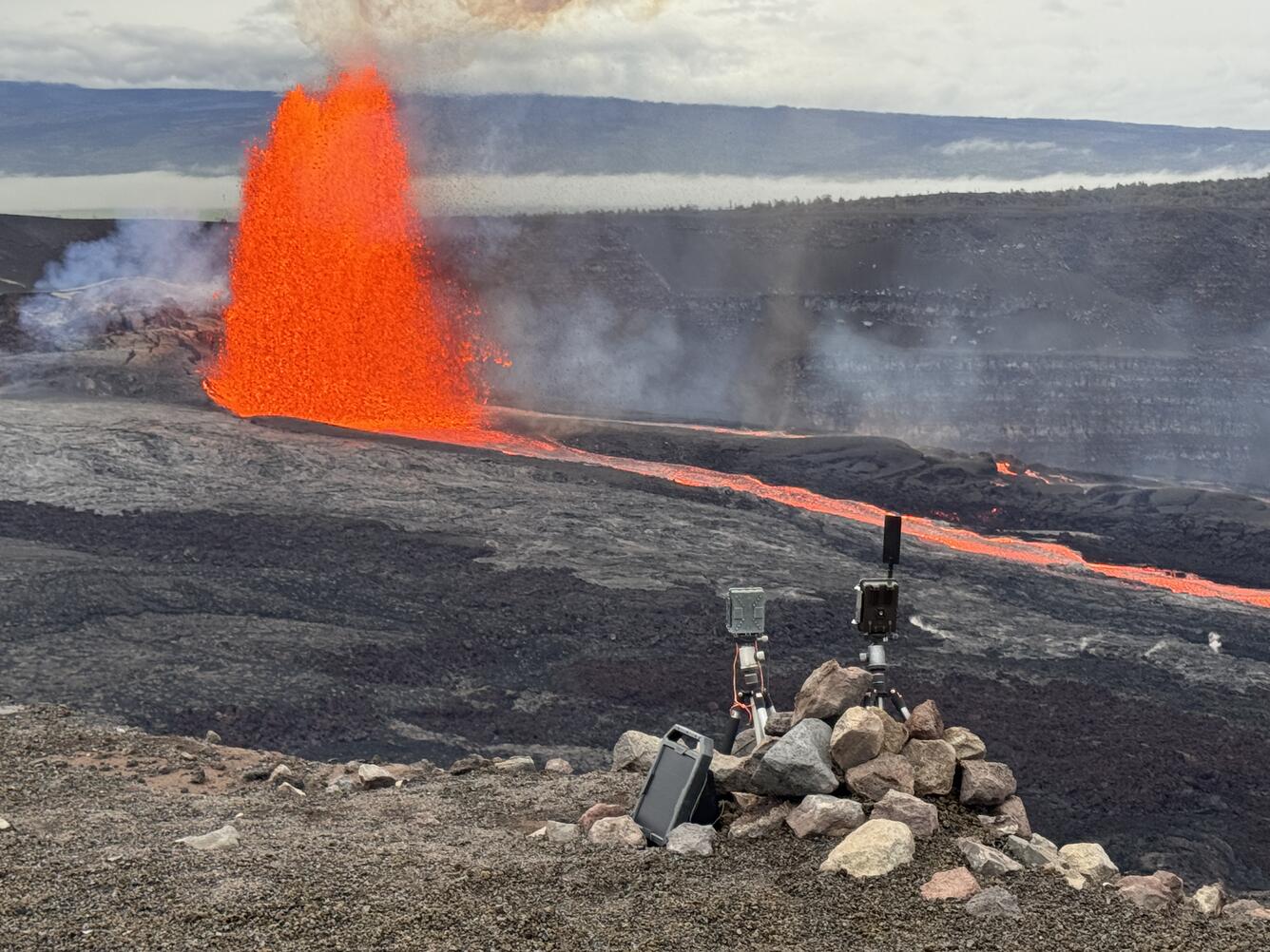
Volcano Watch — Such great heights: measuring Kīlauea’s lava fountains
“How tall is the fountain?” This is the question that volcano watchers keep coming back to once the lava fountains start at Kīlauea.
2 hNOUVEAU
Volcano Minute — How tall is that fountain?
When lava fountains have erupted at the summit of Kīlauea, one question always quickly follows: How tall is that fountain?
23 hNOUVEAU
Mercury exposure to northern elephant seal pups in utero is high and affected by the oceanic foraging behavior of their moms
1 jourNOUVEAU
Wildfires Increased Feather River Water Flow
A new study led by U.S. Geological Survey scientists estimates that the 2020 and 2021 wildfires in northern California increased the amount of water moving through the upper Feather River watershed.
3 joursNOUVEAU
Picturing the Unimaginable: Two Artists’ Early Journey into Yellowstone's Untamed Wonders
How can a landscape of vividly colored hot springs and erupting geysers be conveyed when it defies imagination?
Volcano Watch — Such great heights: measuring Kīlauea’s lava fountains
“How tall is the fountain?” This is the question that volcano watchers keep coming back to once the lava fountains start at Kīlauea. And there have been plenty of opportunities to ask this, as we’ve now had 56 lava fountains over the past two years at the summit of Kīlauea.
Some of these fountains have peaked fairly low (a little over 100 yards or 91 meters) but some have been absolutely towering (over 500 yards or 457 meters). So how do USGS Hawaiian Volcano Observatory (HVO) geologists actually measure the fountain height?
There are actually two sets of measurements. First, there are the real-time estimates that are put in the status reports and daily updates. Second, there are the more detailed and accurate measurements calculated later on that are meant for scientific analysis.
Lire plus
Aa
Feeder sur un iPad : les articles de USGS News dans une colonne à gauche, et Volcano Watch — Such great heights: measuring Kīlauea’s lava fountains ouvert à côté avec sa photo d'une fontaine de lave.

Questions

L’application est-elle gratuite ?
Oui. L’application est gratuite, tout comme un compte Feeder comprenant jusqu’à 200 flux, les notifications et le widget. Les abonnements payants fonctionnent aussi dans l’application.
Ai-je besoin d’un compte ?
Oui. Créez-en un dans l’application avec votre adresse e-mail, Google ou Apple, ou connectez-vous à votre compte existant pour retrouver vos flux.
Sur quels appareils fonctionne-t-elle ?
Sur iPhone et iPad avec iOS 15 ou version ultérieure (les widgets nécessitent iOS 17), et sur Android 7 ou version ultérieure.
Quelle application Feeder est la vôtre sur Google Play ?
Celle publiée sous le nom Feeder.co. Une autre application RSS y porte aussi le nom Feeder, mais ce n’est pas la nôtre. Le bouton Google Play de cette page ouvre la bonne application.

Plus de réponses dans le centre d’aide

Emportez vos flux partout

Un code QR qui ouvre Feeder dans l’App Store ou Google Play

Scannez-le avec l’appareil photo de votre téléphone Ce lien ouvre Feeder dans la boutique d'applications de votre téléphone.

Aide